According to the Verizon Data Breach Investigations Report, 43% of all cyberattacks target small businesses — and only 14% of those businesses feel prepared to defend against them. Meanwhile, downtime and breaches cost far more than prevention ever would.
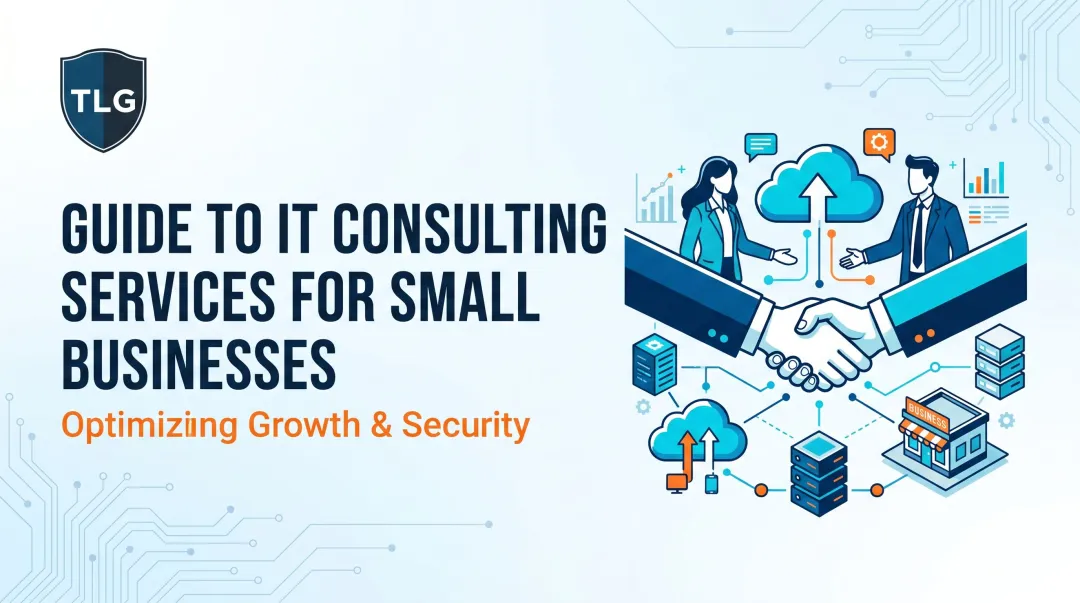
This guide covers the top IT support solutions available to small businesses today: what each model offers, what it costs, and how to determine which fits your operation. Whether you're a five-person startup or a 75-person firm with compliance obligations, there's a right answer here.
Key Takeaways
- IT support models range from pay-per-incident break-fix to fully managed services, with costs and response times varying significantly between them
- Core small business needs: help desk, network management, cybersecurity, cloud apps, and data backup
- Managed IT typically runs $100–$250 per user/month; flat-fee plans start around $1,200/month
- The right fit depends on your business size, compliance requirements, and downtime tolerance
- Utah small businesses can get proactive IT management backed by 35+ years of local experience from The Local Guy at (801) 386-9491
Why Small Businesses Can't Afford to Skip IT Support
Small businesses carry more technology risk than most owners realize — and they carry it with far fewer defenses than larger companies.
SMBs are 3x more likely to be targeted by cybercriminals than enterprises, yet 47% of businesses with fewer than 50 employees allocate zero budget to cybersecurity. That's not a minor gap — it's the gap attackers exploit first.
The financial math is brutal:
- $8,662/hour — average cost of IT downtime for an SMB (Datto)
- $250,000+ — average breach cost for a small business, per Microsoft's 2024 security research
- 60% of small businesses that suffer a cyberattack close within six months
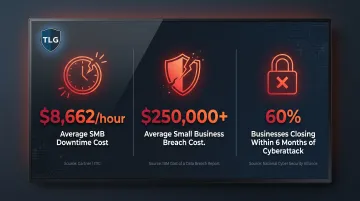
A few hours of preventable downtime can cost more than an entire year of managed IT coverage — which is why more small businesses are treating IT support as a core operating cost, not a line item to cut.
The right support model doesn't require a large IT department. Small businesses today can choose from flexible options that match their size, industry, and budget, and this guide covers all of them.
Top IT Support Solutions for Small Businesses
These are the leading IT support models small businesses rely on, evaluated by service scope, cost structure, and fit for growing teams.
The Local Guy — Utah Managed IT Services
The Local Guy is a South Salt Lake-based managed IT provider with over 35 years of experience supporting small and mid-sized businesses across Utah. They currently manage day-to-day IT for over 100 companies throughout the state, acting as a dedicated in-house IT department — without the in-house cost.
What separates them from national providers is the local, personal service. You get a team that knows your business, monitors your network around the clock, and responds fast — not a call center reading from a script. Security plans are built around each client's specific needs, not a generic template.
They also bring specialized compliance knowledge for dental practices, where regulatory stakes are high and off-the-shelf IT support consistently falls short.
| Category | Details |
|---|---|
| Key Features | Proactive 24/7 monitoring, cybersecurity, Microsoft 365 migration, cloud hosting, dental IT compliance support, on-site and remote assistance |
| Pricing Model | Custom quote based on business size and scope — contact The Local Guy at (801) 386-9491 or support@thelocalguy.com |
| Best For | Utah-based small and mid-sized businesses, dental practices, and local startups needing a trusted long-term IT partner |
Fully Managed IT Services (MSP Model)
A managed service provider takes over your entire IT infrastructure — helpdesk, network management, security, cloud, and disaster recovery. You get a full IT department without hiring one.
The defining feature is proactive management. Your MSP monitors systems continuously, patches vulnerabilities before they become incidents, and maintains a technology roadmap aligned to your business goals. Service Level Agreements (SLAs) lock in response times and establish clear accountability.
| Category | Details |
|---|---|
| Key Features | End-to-end IT management, helpdesk, network monitoring, data backup, compliance guidance |
| Pricing Model | Per-user ($100–$250/month) or flat monthly fee ($1,200–$3,500/month depending on scope) |
| Best For | Small businesses with 10–100 employees needing consistent, comprehensive IT coverage without in-house staff |
Remote IT Support Services
Remote support means technicians diagnose and fix issues through secure screen-sharing and remote access tools — no on-site visit required. For most everyday problems, it's faster and cheaper than waiting for someone to drive out.
About 80% of IT issues can be resolved remotely without a technician ever on-site. The trade-off is real, though: remote support hits its limit when hardware fails, physical cabling is involved, or on-premise infrastructure needs hands-on attention.
| Category | Details |
|---|---|
| Key Features | Screen sharing, remote control access, virtual helpdesk, cross-platform support |
| Pricing Model | Per-user ($30–$100/month) or hourly on-demand ($75–$150/hour) |
| Best For | Remote-first teams, startups, or businesses needing affordable day-to-day support without on-site visits |
Cloud IT & SaaS Support Services
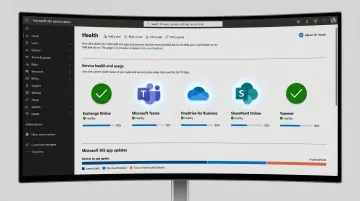
Cloud IT support covers the management of cloud infrastructure, SaaS applications (Microsoft 365, Google Workspace), and cloud storage — reducing dependence on expensive on-premise hardware while keeping your team productive from anywhere.
Adoption has moved fast: 94% of SMBs now use cloud computing, and 63% of SMB workloads are hosted in the cloud. As more businesses migrate off local servers, having a provider who manages that transition — and maintains it afterward — becomes critical. The Local Guy, for example, handles full Microsoft 365 migrations including Teams and SharePoint setup, making the cloud accessible without the technical headaches.
| Category | Details |
|---|---|
| Key Features | Cloud migration, Microsoft 365 management, SaaS app support, cloud backups, remote access setup |
| Pricing Model | Typically $15–$50/user/month for cloud management, on top of licensing costs |
| Best For | Businesses moving off on-premise infrastructure or needing scalable, remote-accessible IT environments |
Break-Fix IT Support (On-Demand)
Break-fix is the traditional model: something breaks, you call a tech, they fix it, you pay. No monthly commitment, no strings attached.
The limitations are significant, though. Without proactive monitoring or an SLA, you only find out about problems after they've already disrupted operations. Response time is never guaranteed. For any business where downtime directly costs revenue, that exposure adds up fast.
| Category | Details |
|---|---|
| Key Features | On-demand response, hardware repair, software troubleshooting, no long-term commitment |
| Pricing Model | $100–$250/hour for remote or on-site labor; parts billed separately. Emergency rates can reach $300/hour. |
| Best For | Very small businesses or sole proprietors with minimal tech needs and infrequent support requirements |
What IT Services Do Small Businesses Actually Need?
Regardless of which support model you choose, most small businesses rely on the same core set of IT services:
- Help desk support — resolves day-to-day user issues quickly so work doesn't stall
- Network and device management — keeps routers, switches, workstations, and mobile devices current and secure
- Data backup and disaster recovery — automated backups with tested restore procedures
- Email and cloud app management — Microsoft 365, Google Workspace, access controls, and licensing
- Cybersecurity protection — the non-negotiable layer
Cybersecurity Is Not Optional
88% of small business breaches include a ransomware component — 2.3x the rate seen at larger organizations. Phishing accounts for nearly 34% of all SMB breaches.
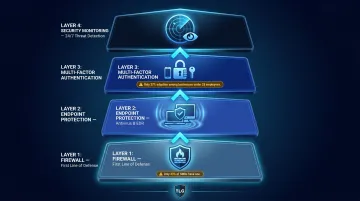
Baseline protections every small business needs:
- Firewall — only 49% of SMBs currently have one in place
- Endpoint protection — antivirus and EDR tools on every device
- Multi-factor authentication — MFA adoption sits at just 27% for businesses under 25 employees
- Security monitoring — catches threats before they escalate into incidents
Compliance Adds Another Layer
For dental practices, healthcare providers, and financial firms, IT support isn't just about uptime — it's about regulatory obligation. Dental offices that handle patient records must comply with HIPAA's Privacy Rule, Security Rule, and Breach Notification Rule, including specific requirements around access controls, encryption, and audit logging. Penalties for violations range from $141 per incident (unknowing violations) to over $2.13 million per violation category annually.
Choosing an IT provider with genuine compliance experience — not just general IT competence — is what separates a smooth audit from a regulatory nightmare. For example, The Local Guy has built specialized dental IT compliance work into its core practice over 35+ years, handling the access controls, encryption configurations, and audit logging that HIPAA requires. That depth of niche expertise matters when the stakes include seven-figure penalties.
How We Chose the Best IT Support Solutions
The solutions in this guide were evaluated on:
- Service comprehensiveness — does it cover the full range of what small businesses need?
- Pricing transparency — are costs predictable and clearly structured?
- Scalability — can it grow with a business from 5 to 50 employees?
- Security capabilities — is cybersecurity built in, or bolted on?
- Response time commitments — are SLAs defined and enforceable?
- Small business fit — is the provider actually built for businesses at this scale?
Common Mistakes to Avoid
Small businesses frequently select IT providers based on the wrong factors:
- Price-only decisions — the cheapest option rarely includes proactive monitoring or security
- Skipping SLA review — no guaranteed response time means no accountability when things go wrong
- Skipping compliance vetting — a provider unfamiliar with HIPAA or financial regulations can create real liability
- Locking in a provider that can't scale — a solo freelancer may work for five employees but won't serve 50
A low monthly rate means little if an unplanned outage costs your team a full day of work. Vet providers on the criteria above — the savings show up later, in fewer emergencies and faster recoveries.
Conclusion
The right IT support solution for your small business matches your size, industry, and compliance requirements — and scales with where you're headed, not just where you are today.
For Utah small businesses, The Local Guy delivers exactly that: managed IT support backed by over 35 years of local experience, with a Utah-based team that knows the compliance pressures, growth challenges, and day-to-day realities your business faces. Unlike national call centers, you get a dedicated local team that responds fast and stays accountable.
Reach out at (801) 386-9491 or support@thelocalguy.com to start a conversation about what the right IT foundation looks like for your business.
Frequently Asked Questions
How much does IT support cost for a small business?
Costs vary by model. Break-fix support runs $100–$250/hour on-demand. Managed IT services typically cost $100–$250 per user per month, or $1,200–$3,500/month as a flat fee for smaller teams. The total depends on team size, service scope, and whether 24/7 coverage is included.
What IT services do small businesses need?
Most small businesses need help desk support, network and device management, cybersecurity protection, data backup and disaster recovery, and cloud app management. Regulated industries like healthcare or dental also need compliance-specific support layered on top.
What is the average IT budget for a small business?
SMBs allocate approximately 6.9% of total revenue to IT expenses — more than larger enterprises, but often without dedicated cybersecurity spending. Yet despite that investment, 47% of businesses under 50 employees spend nothing specifically on cybersecurity, leaving them exposed to serious risk.
Is it cheaper to outsource IT support for small businesses?
For most businesses under 50 employees, yes. The fully loaded cost of one in-house IT employee runs $80,000–$118,000 annually. A managed IT contract for a 25-person team typically costs $30,000–$60,000/year, while covering gaps a single in-house generalist often can't.
What is 24/7 technical support?
It means your provider monitors systems and responds at any hour, not just during business hours. For small businesses, that continuous coverage is what turns a caught anomaly into a non-event rather than a morning crisis.