Introduction
Launching a dental practice in 2026 costs between $750,000 and $800,000, with technology and software infrastructure accounting for $30,000 to $70,000 of that total. Most startup dentists budget carefully for operatories, equipment, and leasehold improvements — then treat IT as an afterthought. That's a costly mistake.
Dental IT isn't general business IT. Your network must support HIPAA-compliant data handling, digital radiography (including CBCT), practice management software, and clinical workflows that a generic IT provider will often misconfigure.
A single-dentist practice loses roughly $600 per hour during IT downtime, and that figure doesn't include patient attrition or the long-term damage to your schedule.
This guide breaks down what dental IT support actually includes for a startup practice, which providers stand out in 2026, and what questions to ask before you commit to a contract.
Key Takeaways
- Dental IT must cover HIPAA compliance, PMS integration, imaging support, and cybersecurity — helpdesk alone isn't enough
- Dental-specialized MSPs outperform general IT providers in dental environments — faster issue resolution, fewer compliance gaps, and better PMS familiarity
- Managed dental IT typically runs $249–$1,200/month; infrastructure build-outs cost $15,000–$25,000+ separately
- IT planning must start before construction — retrofitting after drywall is expensive and delays opening
- Utah startups benefit from working with a local IT partner who knows state-specific compliance requirements and can be on-site when remote support isn't enough
What Dental IT Support Actually Covers for a New Practice
Most startup dentists picture dental IT support as someone who fixes a frozen computer. The actual scope is much broader.
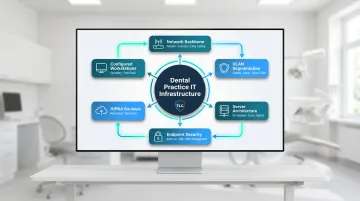
The Core Technology Stack
A startup dental practice needs several interconnected systems running correctly from day one:
- Enterprise-grade firewall, managed switches, and Cat6a structured cabling for the network backbone
- Separate VLANs for clinical, administrative, and guest traffic to isolate sensitive data
- On-premise server, cloud PMS, or hybrid architecture chosen based on imaging volume
- Antivirus, EDR, and patch management deployed on every workstation
- Automated, immutable HIPAA-compliant backups tested on a regular schedule
- Configured workstations for operatories, front desk, and any mobile devices
Why Imaging Is the Hard Part
The component most general IT providers get wrong is dental imaging. CBCT scanners, intraoral sensors, and panoramic X-ray systems carry requirements that don't appear in standard IT playbooks. Carestream's Trophy Imaging platform, for example, requires a minimum 1 Gb/s local network when 3D volumes are present. These systems also need fixed IP addresses, specific driver compatibility, and DICOM-compliant configurations.
Get this wrong on opening day and you're looking at a practice that can't capture or retrieve images, with a waiting room full of patients and zero revenue coming in. General IT firms misconfigure these systems regularly because they encounter them rarely. Dental-specialized providers have run these setups dozens of times and know exactly where the failure points are.
Best Dental IT Support Providers for Startup Practices in 2026
These providers were selected based on dental-specific expertise, startup support capability, HIPAA compliance services, geographic coverage, and publicly available client feedback.
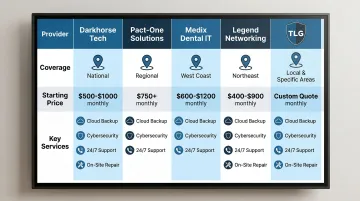
Darkhorse Tech
Founded around 2012 by Reuben Kamp (a former Benco Dental lead installer), Darkhorse Tech is a dental-exclusive MSP that has served 1,450 dental clients and supported 475 startup practices. Their exclusive focus on dentistry — no other verticals — means every technician understands PMS platforms, imaging systems, and clinical workflows without needing a primer.
Their Cloud Dental division, built in partnership with Open Dental, reduces infrastructure overhead for startups operating on tight budgets by eliminating the need for an on-premise server.
| Details | |
|---|---|
| Key Services | Startup build-outs, unlimited IT support, HIPAA backup, managed antivirus, firewall and network management, vendor management |
| Coverage | All 50 states; headquarters in Syracuse, NY with offices in TX, NC, PA, and NY |
| Pricing | Month-to-month agreements starting at $249/month; scales with office size and support scope |
Pact-One Solutions
Operating since 2003 out of Las Vegas, Pact-One is a dental-focused MSP with offices across 12 states and nationwide remote support coverage. They offer IT analysis and hardware procurement support for new builds — practical for startups speccing out their first operatory workstations.
Their published pricing guide breaks down costs by practice size, which helps startups plan budgets before equipment purchases begin.
| Details | |
|---|---|
| Key Services | Dental IT support, IT consulting, network security, cloud migration, backup and disaster recovery, hardware procurement |
| Coverage | CA, NV, AZ, OR, WA, UT, ID, CO, NM, TX, MI, PA |
| Pricing | Small practices (1–5 chairs) start at approximately $500–$1,200/month; request current quotes directly |
Medix Dental IT
Based in Iowa with 1,000+ dental clients and 20+ years of operation, Medix Dental IT serves established practices and DSOs under a flat monthly "Onyx Partnership" model. They offer startup-specific services including personalized technology roadmaps for new practices — confirm current eligibility and pricing directly before engaging.
| Details | |
|---|---|
| Key Services | Managed IT, cybersecurity, DSO integration support, technology consulting, startup technology roadmaps |
| Coverage | National coverage; offices in Iowa and Denver, CO |
| Pricing | Annual contracts starting at approximately $699/month; verify startup eligibility and current pricing directly |
Legend Networking
Founded around 2004 and based in Dallas, Legend Networking serves dental, medical, eye care, and veterinary practices across select metro markets. Their technology partner list includes Dexis, Dentrix, Eaglesoft, Carestream Dental, Sirona, and Weave, which confirms genuine familiarity with the dental software ecosystem.
Legend Networking carries a 2.4 out of 5 employee rating on Indeed (as of April 2026), with reviewers citing concerns about pay, management structure, and training quality. Request client references and verify service quality independently before signing a contract.
| Details | |
|---|---|
| Key Services | Network design, workstation and server setup, HIPAA compliance, cybersecurity, imaging integration, VoIP |
| Coverage | TX, FL, VA, MD, DC metro areas; verify current geographic coverage before inquiring |
| Pricing | Annual contracts starting at approximately $399/month; scales with operatory count and services |
The Local Guy
Based in South Salt Lake, Utah, The Local Guy brings over 35 years of local IT experience and specialized expertise in dental IT compliance and high-security network design. For startup dental practices opening in Utah, a local provider who can be on-site within hours and already understands the regional market is a practical advantage that national MSPs can't replicate.
Their 24/7 proactive monitoring, layered cybersecurity (ransomware, phishing, unauthorized access), and custom compliance frameworks make them a capable choice for Utah-based dental startups that want a dedicated local partner rather than a remote national MSP.
| Details | |
|---|---|
| Key Services | Dental IT compliance, network design and security, cybersecurity, cloud solutions, proactive 24/7 monitoring, custom IT solutions |
| Coverage | Utah (South Salt Lake headquarters); best fit for startup practices opening in the Utah market |
| Pricing | Contact directly at (801) 386-9491 or support@thelocalguy.com for startup-specific pricing |
What to Look for in a Dental IT Support Partner
Choosing the wrong IT partner at launch can mean HIPAA violations, imaging systems that won't connect, and practice management software nobody knows how to configure. Here's what to evaluate before signing anything.
HIPAA Compliance — Verify, Don't Trust
Your IT provider must demonstrate specific knowledge of the HIPAA Security Rule, not just mention it on their website. OCR penalties for willful neglect run up to $2,067,813 per year — and OCR has settled enforcement actions specifically against dental practices.
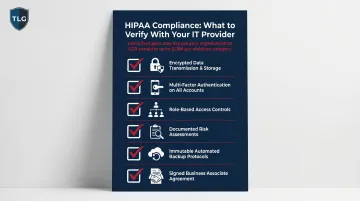
Ask prospective provider for evidence of their compliance framework, including:
- Encrypted data transmission and storage
- Multi-factor authentication (MFA) across all user accounts
- Role-based access controls
- Documented risk assessments (required for all covered entities)
- Immutable, automated backup protocols
- Signed Business Associate Agreement (BAA)
Dental Imaging Expertise
Ask directly whether they have configured the specific imaging systems you're purchasing — Dexis, Carestream, Planmeca, Sirona, or others. DICOM compliance, fixed-IP device configuration, and CBCT room requirements are not things to learn on your opening day.
PMS Integration Experience
Your IT provider should have hands-on familiarity with your chosen PMS platform — Dentrix, Eaglesoft, Open Dental, Curve Dental, or Archy. That means they can:
- Configure the software on your specific network setup
- Troubleshoot errors without defaulting to vendor support lines
- Apply updates without disrupting daily scheduling or billing workflows
Construction-Phase Engagement
The best dental IT providers get involved before drywall goes up. Dental office construction runs 3 to 9 months depending on build type — IT planning needs to start at the design phase, not after permits are pulled.
Key infrastructure that must be built in, not retrofitted:
- Structured cabling and operatory network drops
- Equipment rack placement and UPS power planning
- CBCT room power and network requirements
Contract Terms and Hardware Ownership
Look for month-to-month agreements or clearly defined scalability terms. Ask whether the provider owns or leases any hardware they install — equipment lock-in makes switching providers costly and complicated.
How We Selected These Providers
We evaluated providers on this list across five criteria:
- Dental-specific expertise : exclusive or primary focus on dental practices
- Startup capability : ability to support new builds and launch-phase planning
- HIPAA compliance services : documented frameworks, not just general cybersecurity claims
- Geographic coverage : national reach or strong regional presence
- Client reputation : publicly available reviews and feedback
Knowing what separates a strong provider from a weak one also means recognizing where buyers go wrong. Three common mistakes practices make when choosing a dental IT provider:
- Selecting based on lowest monthly price without comparing coverage scope
- Skipping verification of dental imaging experience
- Signing long-term contracts without understanding hardware ownership terms
This list isn't exhaustive. For practices in smaller Utah markets, a local provider like The Local Guy often delivers faster on-site response and more hands-on support than a national MSP can — especially where a remote-primary model leaves too many gaps.
Conclusion
The right dental IT partner understands the clinical environment, not just the IT environment. Imaging workflows, PMS platforms, and HIPAA compliance are non-negotiable — and general IT providers routinely underdeliver on all three.
Evaluate providers on dental-specific experience, startup onboarding process, contract flexibility, and long-term scalability. Brand recognition and low monthly pricing are poor proxies for actual capability.
For dental practices launching in Utah, The Local Guy offers over 35 years of local IT experience, hands-on experience with HIPAA-compliant network design and dental PMS onboarding, and the kind of on-the-ground presence that national MSPs can't replicate. Reach out at (801) 386-9491 or support@thelocalguy.com to discuss your startup IT needs — and get a customized onboarding plan before opening day.
Frequently Asked Questions
How is information technology used in dental practices?
Dental IT supports digital radiography, practice management software (scheduling, charting, billing), HIPAA-compliant data storage, patient communications, and clinical imaging systems. All of these require a purpose-built, secure network — not a standard office IT setup.
What CRM do most dentists use?
Dental practices typically use practice management software (PMS) rather than traditional CRM tools. Common platforms include Dentrix, Eaglesoft, Open Dental, Curve Dental, and Archy — most of which include integrated patient communication and recall features.
How much does dental IT support cost for a startup practice?
Managed dental IT services typically run $249 to $1,200+ per month depending on practice size and service scope. Initial infrastructure build-out costs — networking, workstations, imaging integration — are separate and typically range from $15,000 to $25,000 for a startup. Pricing varies, so confirm specifics with each provider before committing.
Do I need a dedicated server or can I use cloud storage for my dental practice?
Most modern startup practices use a hybrid approach: cloud-based PMS for scheduling and billing, paired with local workstations or a PACS server for CBCT and high-resolution imaging that requires fast local rendering. A dental IT specialist can configure the right architecture for your operatory count and imaging volume.
When should I involve a dental IT provider in my practice startup?
IT planning should begin before construction starts — ideally during the design phase — so that structured cabling, operatory drops, and imaging room requirements are built into the floor plan. Retrofitting after drywall installation is significantly more costly and can delay your opening date.
What does HIPAA compliance require from a dental IT perspective?
Key technical safeguards your IT provider should cover:
- Data encryption at rest and in transit
- Multi-factor authentication and role-based access controls
- Automated, immutable backups and documented risk analysis
- Employee security training
Your managed IT agreement should include all of the above, plus a signed Business Associate Agreement from your provider.